'No Body
Called It
Power.'
A short documentary exploring the memories of three women.
The project examines the lives of a generation of women who grew up in a Spain of limited rights and freedoms.
01 / Context
A short documentary exploring the memories of three women on the occasion of International Women's Day.
The project examines the lives of a generation of women who grew up in a Spain of limited rights and freedoms. Far from building a traditional activist manifesto, the piece focuses on everyday life and lived experiences, drawing on three real testimonies to reveal the realities of the era. The challenge was to transform historical context into a human narrative, removed from academic analysis or political sloganeering.
02 / Concept
Memory as a tool capable of humanizing profound social change.
The project is built around a clear idea: showing social transformation through the direct memories of those who lived it. Listening to the past to understand changes we now take for granted. Rather than putting forward an explicitly political discourse, the narrative relies on simple questions and personal memories that build a generational portrait where the contrast between past and present emerges naturally, without needing to be underlined.
Cover Explanation
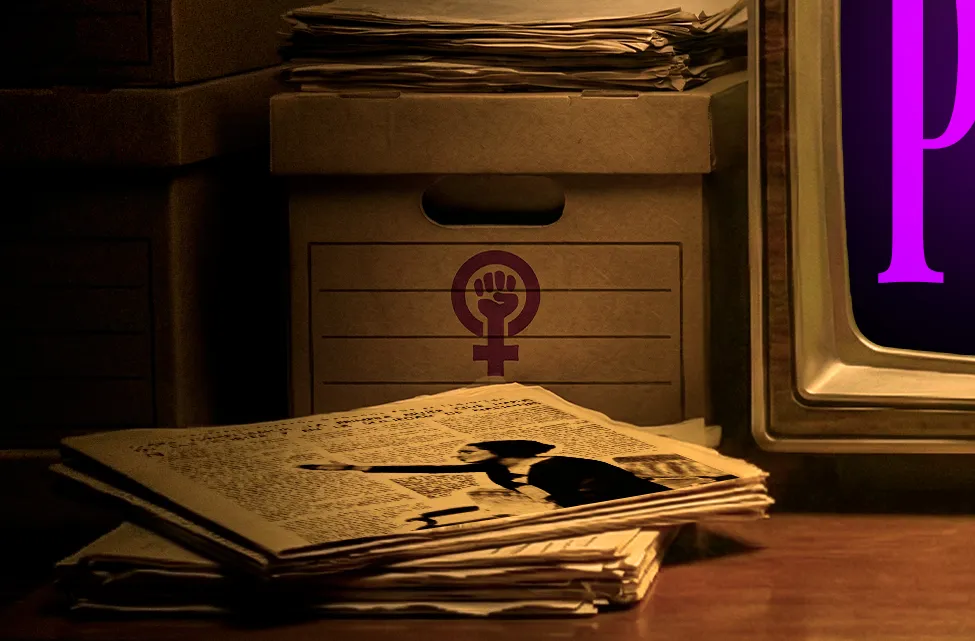
Archived Voices of Feminism
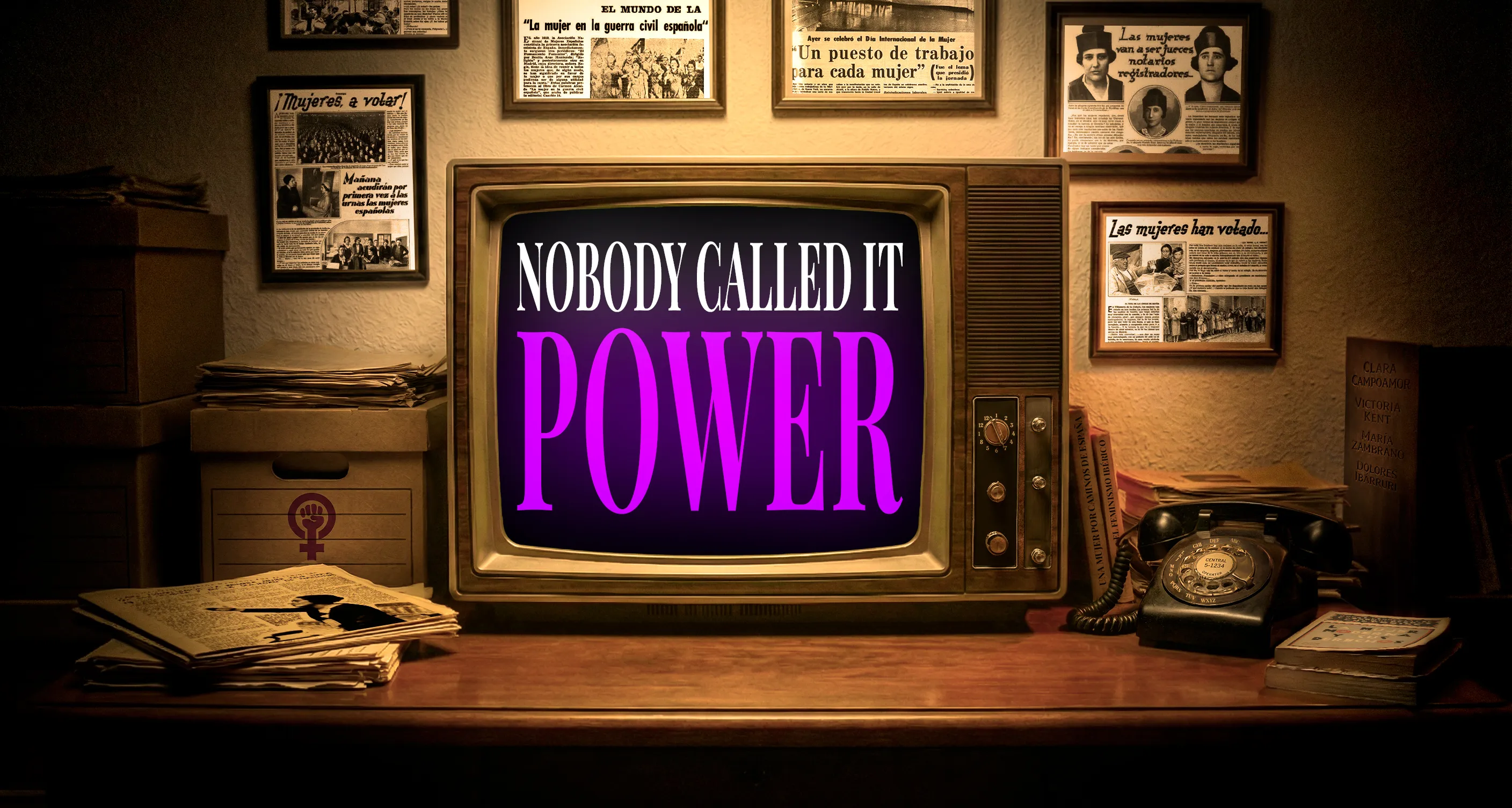
An archival box marked with the feminist symbol, surrounded by newspapers. The pairing speaks to feminism as something that needs to be collected and kept, not only protested. History as an object you can hold.
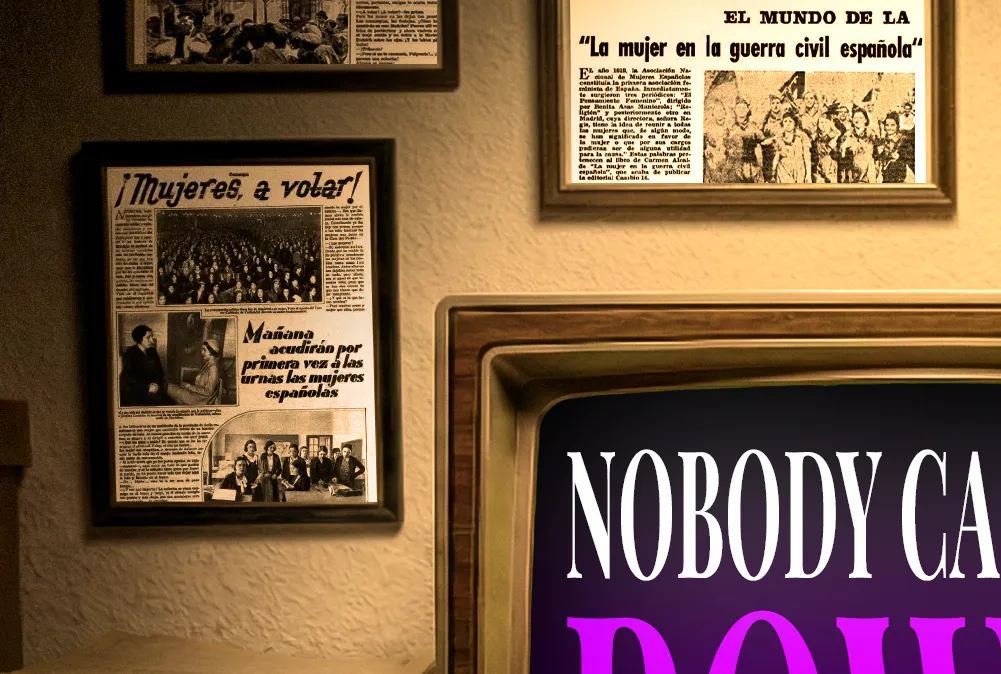
Women on the Front Page
Headlines like "¡Mujeres, a votar!" and references to women during the Civil War place the piece inside a specific chapter of Spanish history. These were not abstract debates. They were printed, dated, and distributed. The clippings make that visible.
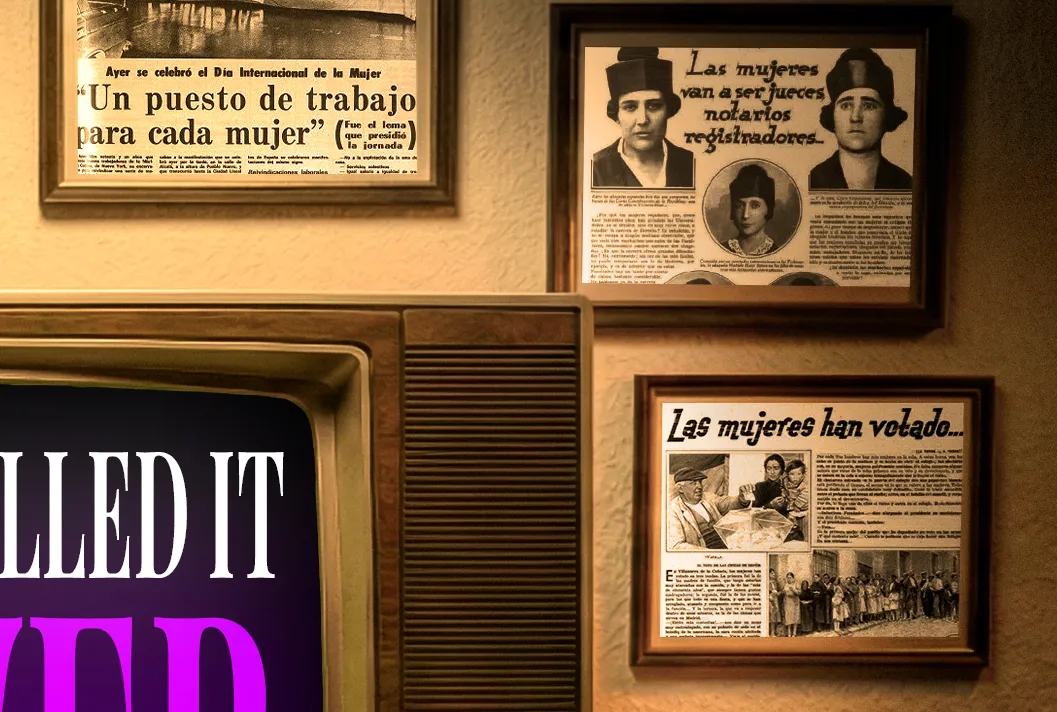
Women Enter the Public Sphere
The headlines in this section document a shift: women moving from being talked about to being present. The right to vote, access to legal professions, International Women's Day. Each clipping marks a moment when the boundary moved, quietly or not.
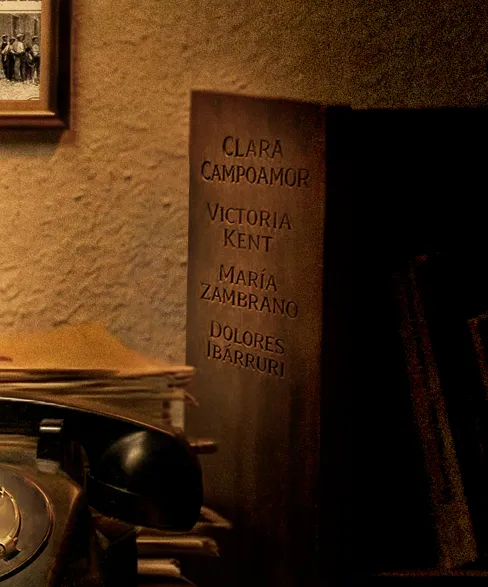
Names That Shaped History
Four names engraved on the shelf: Clara Campoamor, Victoria Kent, María Zambrano, Dolores Ibárruri. Not decoration. A record of women whose ideas shaped public life in Spain, placed here as a quiet form of recognition.
Books That Preserved the Struggle
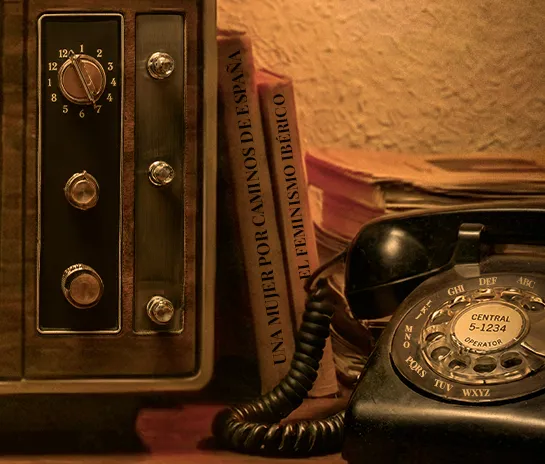
"Una mujer por caminos de España" and "El feminismo ibérico" sit together on the shelf. Two books that carried feminist thought across generations, long before the conversation became public. Feminism was also this: written, read, and passed on.
A Voice in Print
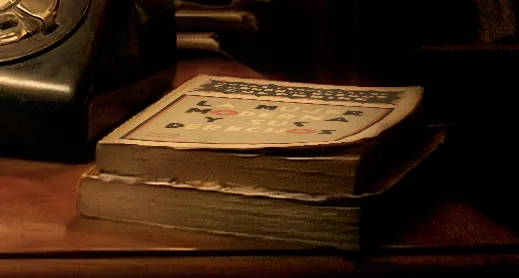
Carmen de Burgos' "La mujer moderna y sus derechos" rests on the desk. One of the earliest Spanish feminist texts, placed here not as a reference but as a presence. The argument was already written. It just took time to be heard.
Final Composition
The culmination of the visual research. All the elements come together to create a single cohesive key visual that speaks to the historical and emotional weight of the documentary.
03 / Direction
A minimalist visual language designed to remove distractions and place full attention on the human testimony.
The direction is grounded in a premise of reduction, where the spoken word becomes the absolute narrative axis. We chose a sober and intimate cinematic style, placing the camera close to the subjects' faces to capture every silence, gesture, and micro-expression, turning the screen into a space of active listening. The lighting remains clean and natural, avoiding any artificial dramatization that could undermine the authenticity of the domestic interview setting. The space functions as a neutral container, allowing the emotional weight to rest entirely on the story being told.
04 / Process
A process built on listening, trust, and the gradual construction of the narrative.
The development began with a research phase into the generational context of the participants, followed by the design of an open interview structure. Rather than a rigid script, we used direct questions to trigger specific memories, allowing conversations to evolve organically. My role as director was to ensure a relaxed atmosphere on set, enabling the women to share their stories without the pressure of a formal production, which allowed unexpected themes to surface and enrich the narrative. In the editing phase, the main challenge was finding the balance between the three voices to build a coherent dialogue. The edit functions as a cross-conversation, where one protagonist's memories find resonance in the testimonies of the others, allowing the piece to move beyond the individual interview and become a collective portrait.
05 / Impact
A project that turns personal memory into a way of understanding social change.
For younger audiences, the project offers a necessary perspective on how recently past social restrictions existed, for older generations, it works as an exercise in recognition and validation. The short film does not seek to offer closed conclusions, but to raise an implicit question about how many social advances we now take for granted. By turning the act of listening into a reflective experience, the project contributes a valuable record to shared memory, using personal stories as a way to understand the structural changes of our society.